THE SOURCE
PDF inbox
→Invoices, contracts, exposés, reports, scans — any PDF up to 32 MB and 100 pages. Drop in or pipe in via API; the engine handles the rest.
Drop a PDF. A four-pass validation pipeline returns clean JSON with a confidence score on every field — ~90% accuracy on the messiest formats.
Every team has the same pile. Invoices that need to be filed. Contracts that hide the terms that matter. Property exposés where the only number you need is buried on page 47. Government forms, claim documents, vendor scans — all of it carrying the data your stack actually needs to run. And all of it stuck inside a PDF that nobody has time to read carefully, never mind type into a system. So ops re-types. Sales re-types. Finance re-types. Three teams paying for the same lossy translation.
Every PDF was data prison.
A single LLM call against a PDF hallucinates somewhere around a third of the time. Off-the-shelf OCR loses the layout. Document-AI vendors give you confidence scores but not corrections. None of them are good enough to ship the output straight into your CRM or accounting system.
The shift is the pipeline. Extract once. Then re-read the document to verify every field against the source. Then run a correction pass that removes fabricated fields and fixes the ones the verifier flagged. Then a programmatic arithmetic pass that catches sums that don't add up. The same model the single-shot approach would use, run four times under structured pressure — and the accuracy goes from ~65% to ~90% on the same input.
Layout handled by a dedicated OCR model. Validation handled by the LLM. Schema enforced by tool-calling. You get clean JSON, every field source-tagged back to the page it came from.
Adaptive extraction means the engine first classifies what it's looking at, then runs the schema that fits. One stack, every document type — including the scanned and the multi-language and the legacy.
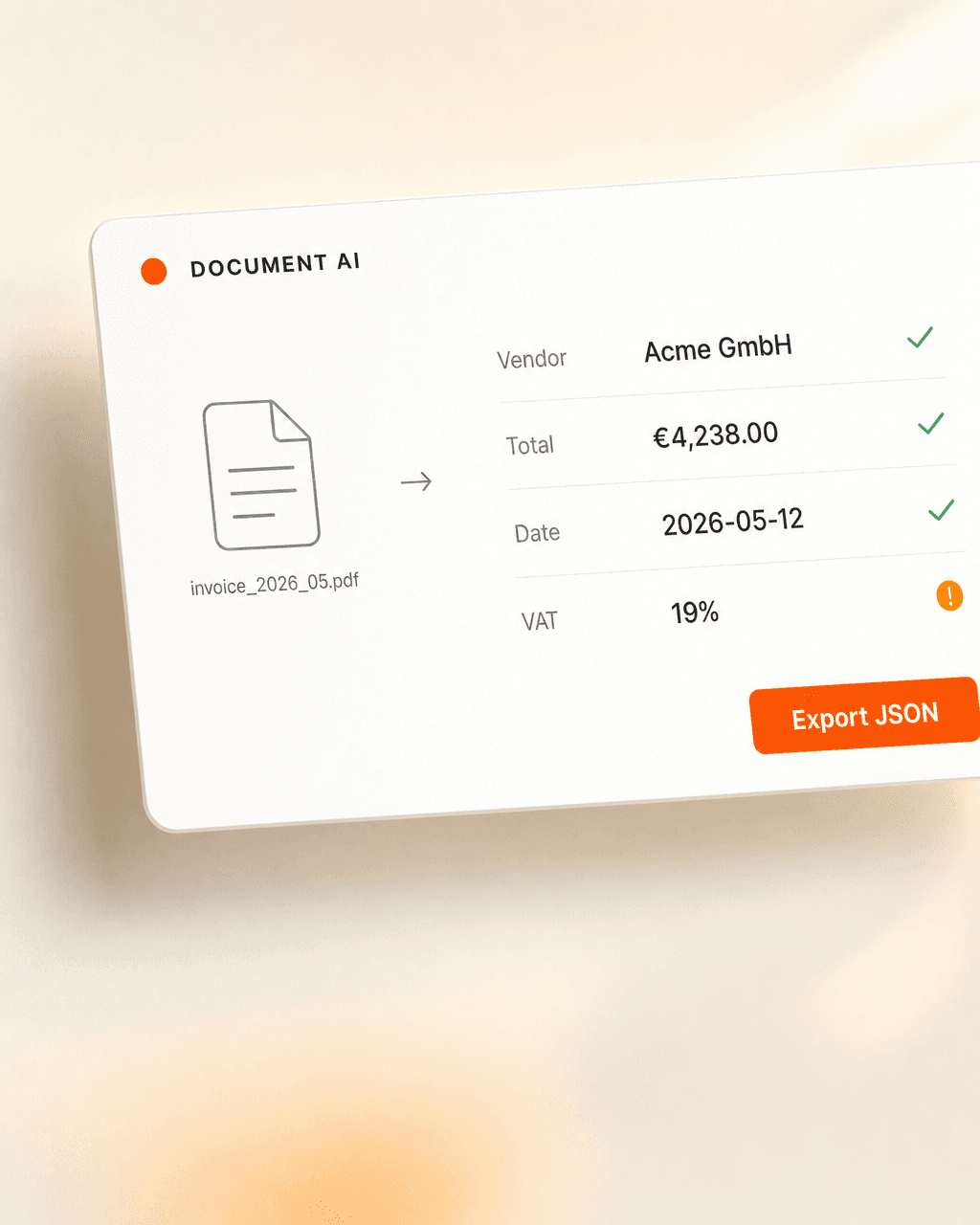
Pass one extracts every field with source attribution. Pass two re-reads the document to verify each one. Pass three corrects what the verifier flagged and strips out fabrications. Pass four runs arithmetic checks — totals, ratios, dates that don't fit. What lands in your stack has been agreed upon four times.
“Verified by an agent.that’s the whole product
Sheets, CRM, accounting, warehouse, webhook — pick the destination and the engine writes the structured output where you already work. Every field carries its confidence score; you choose the threshold for auto-accept versus review.
Invoices, contracts, exposés, reports, scans — any PDF up to 32 MB and 100 pages. Drop in or pipe in via API; the engine handles the rest.

Extracted fields land in Google Sheets or Excel as clean rows — one document per row, columns mapped to your schema.

New leads, properties, vendors — created or enriched directly in your CRM with every field source-tagged back to the original page.

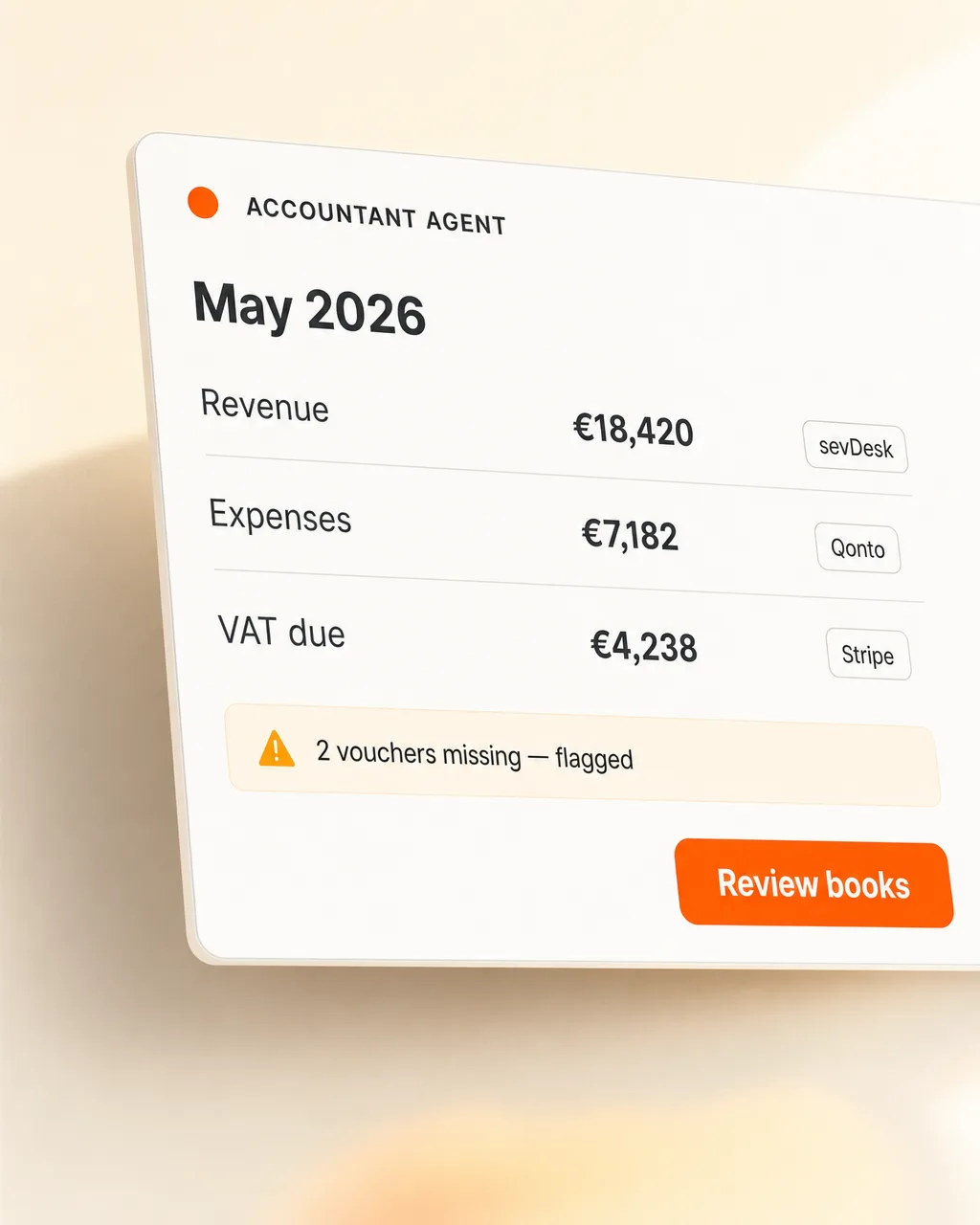
Invoice line items, VAT splits, due dates, vendor identity — drafted as bookings in sevDesk, Xero or QuickBooks, ready for review.

For volume work, the verified JSON streams straight into your warehouse — Postgres, BigQuery, custom schema. Confidence scores included.

POST the structured output to any endpoint — your app, n8n, Zapier, an internal service. Every payload includes confidence and source.
Pick a destination. Or two. The engine writes where your team already works.
The half-week that finance and ops spent re-typing PDFs into systems goes back. New documents land structured, source-tagged, ready for the next step. The team reviews edge cases instead of typing line items. And the deals, leads and properties that lived inside unread PDFs are suddenly searchable, dashboarded, alerted on — the things you were already paying for the data to do.
We define the JSON schema together — the fields you actually need, the validation rules, the confidence threshold for auto-accept. The engine renders against your schema, not a generic one.
We run your back-catalogue of PDFs through the pipeline, tune the prompts against your worst-case documents, and wire the output into your first destination — sheets, CRM, accounting, or warehouse.
New PDFs land via inbox, upload or API. The pipeline runs. Verified data lands in your stack. We're around when you want a new destination wired in or a tighter schema.
Twenty minutes. Bring a sample PDF — we'll walk through the schema, the validation passes, and where the JSON should land.
Or email matthias@lifeisapitch.io